


Walmgate Bar and York’s only surviving Barbican

The City of York is famous for its Medieval city walls which stretch for over 2 miles around the historic city. They are also recognised as the most complete Medieval walls in England enclosing about 260 acres of land.
The first walls to be built in York were erected by the Romans to surround their fort. After building a wooden wall they were replaced by a stone protective wall around 100AD. When the Romans left, the walls did fall into disrepair under the Anglo Saxons and the Vikings, but after the Norman Conquest the city started building a protective barrier around a much larger area (about 5 times bigger) than the original Roman walls.

The Medieval city walls were built for a couple of reasons, firstly for protection – remember during the Middle Ages, the Scots were regularly raiding the North of England. The other reason was that York had many Guilds controlling different trades. If you were not a member of a Guild you couldn’t trade within the City, so again they had a “protectionist purpose” to control unofficial trade.

These medieval city walls were built out of magnesian limestone which was transported up the River Ouse from a quarry in Tadcaster. The same location as the stone from which York Minster was built as well as the earlier the Roman walls. In fact the Romans knew Tadcaster as Calcaria, so as limestone is calcium carbonate it shows the Romans had a good grasp of chemistry!
There are 4 main entrances or gates within the Medieval city walls – known as Bars (nothing to do with pubs!). These are Micklegate Bar, Monk Bar, Bootham Bar and Walmgate Bar, with some smaller gateways or bars interspersed along the walls such as Fishergate bar and Victoria Bar.

All these Bars would have once had a Barbican. This was an extra level of fortification to help create a barrier before a primary gateway into the city. It comes from the French word “Barbacane” – which means fortified outpost. In Medieval city gateways they usually took the form of narrow walled passageway (known as a funnel), where if attackers breached the first outer gateway, the defenders could attack them from above on the surrounding outer walls. This passageway was sometimes known as the “Killing Ground”

But nowadays, there is only Walmgate Bar left in York with its Barbican. Those at Micklegate Bar, Monk Bar and Bootham Bar are long gone. But who was to blame?
All the Bars did receive some damage during the siege by Parliamentarian troops during the English Civil War in the 1600’s, but the real culprits were the pesky Victorians!

During the reign of Queen Victoria, it was all about progress and the protection and preservation of old heritage buildings was not really seen as important. Victorians would not let a historically important site stand in the way of progress, so when the City Council wanted to build an inner ring road around the city walls, the Barbicans were seen as surplice to requirements.
Unfortunately the Barbicans were demolished. The Victorians also knocked big holes in the walls when they built the first railway in York within the city walls close to where The Grand Hotel stands these days.
At one point York Council proposed to parliament that the entire Medieval city walls were demolished. Fortunately with the help of lobbying from the famous artist William Etty (who was born in York), the walls were saved – one of the reasons for the statue of Etty looking out from in front of York City Art Gallery at the walls at Bootham Bar!.
It is great that at least one Barbican was saved in York, with Walmgate Bar retaining its barbican as well as portcullis and inner doors.

The existing Walmgate Bar has evolved over its life, the oldest section being a thick round Romanesque stone arch from the 1100’s but the bulk of the structure is from the 1300’s when much of the walls were built. The wooden gates were re-built and the ones we see now date to the 1400’s.
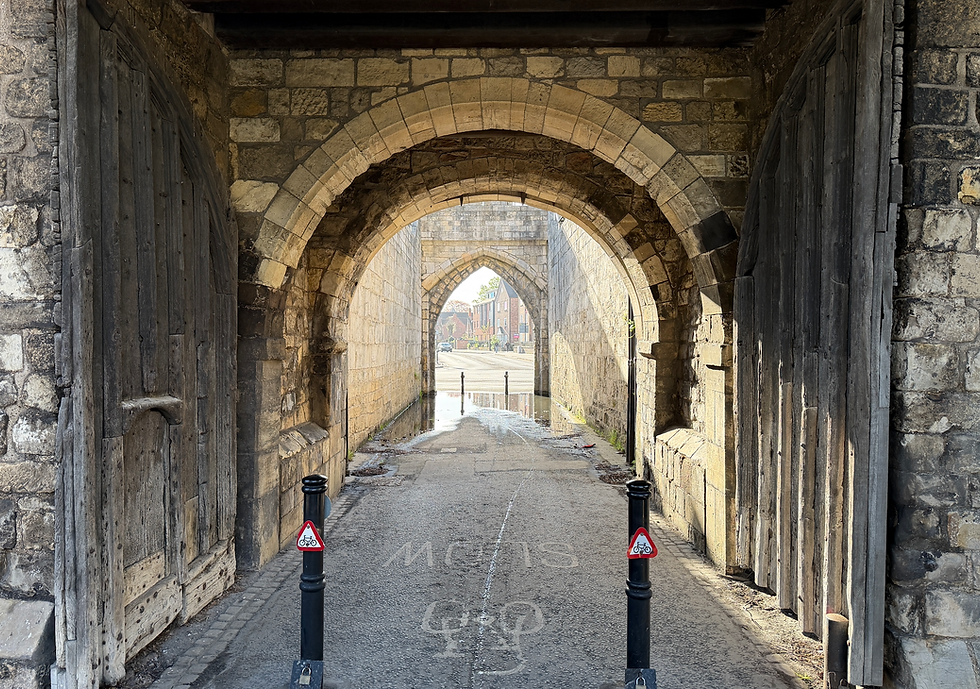
What is unusual about the inside of the Bar is that a wooden timber framed structure built in the 1500’s during the reign of Elizabeth 1, to expand the living space of the Bar. It is now a popular small café and tearoom called Gatehouse Coffee. The characterful interior with exposed stone is worth a visit and the coffee is excellent!
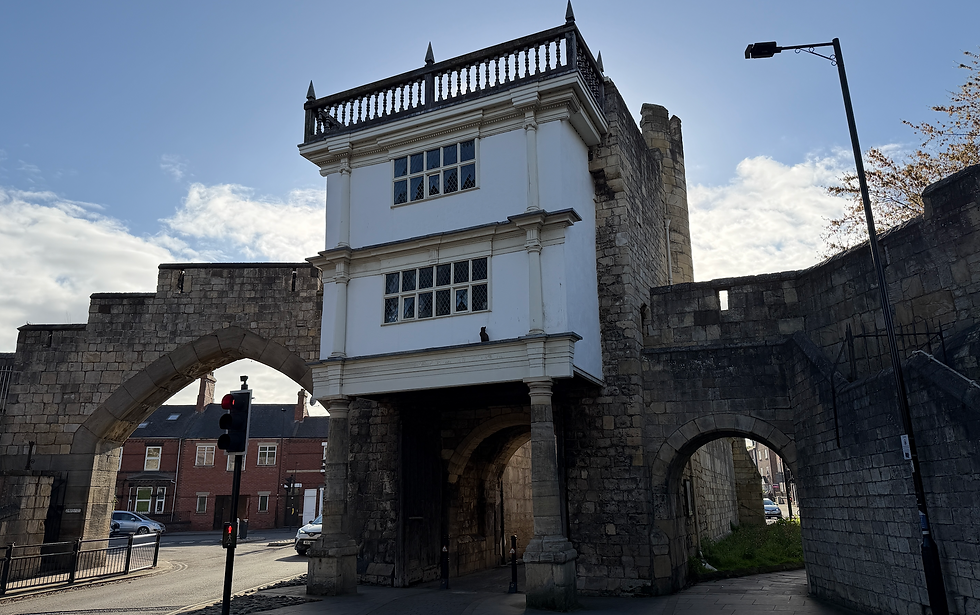

The Walmgate Bar and its Barbican have been repaired a few times over the years. Firstly after the Civil War when money confiscated from Royalists was used for repairs after the Parliamentarian siege, then again in Victorian times by the City Corporation.
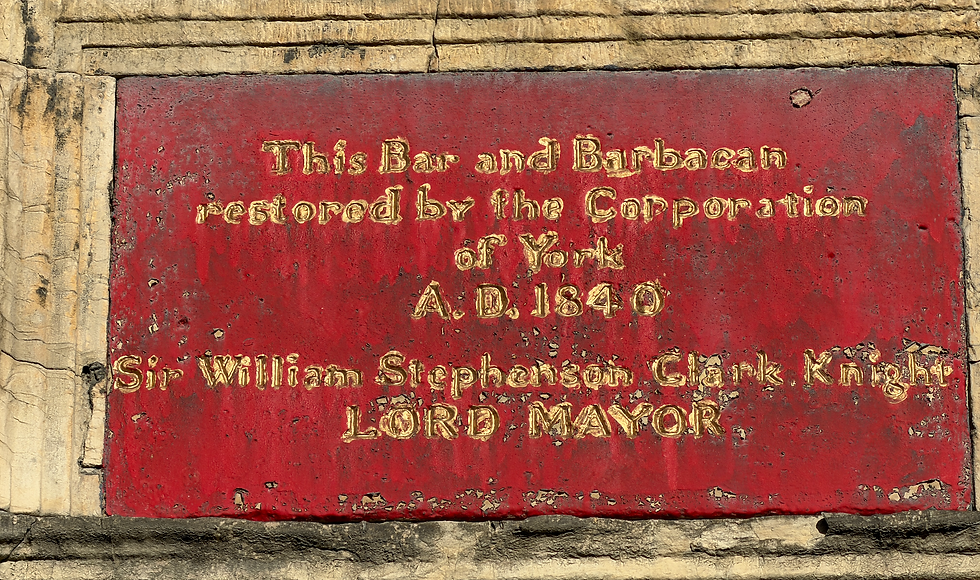
Finally the Bar and Barbican received its most recent repairs in 2016 and also metal safety rails were added.

But why did Walmgate Bar’s Barbican survive?
The local MP during the time was one of the famous chocolate producing Rowntree family. He claimed that the reason the Bar wasn’t demolished in that part of York was that the people who lived there were so poor they were deemed not to matter. Then even after the slum clearances of the area, the Mayor of York rejected another application to demolish the Barbican stating “far be it for me to be known as the man who lost the walls their last Barbican!”
So the Barbican survived and it is great that we can still take a look back into the past and get a picture of what all the medieval gateways (Bars) into York would have once looked like.


Comments